Top Mobile App Development Trends for 2026
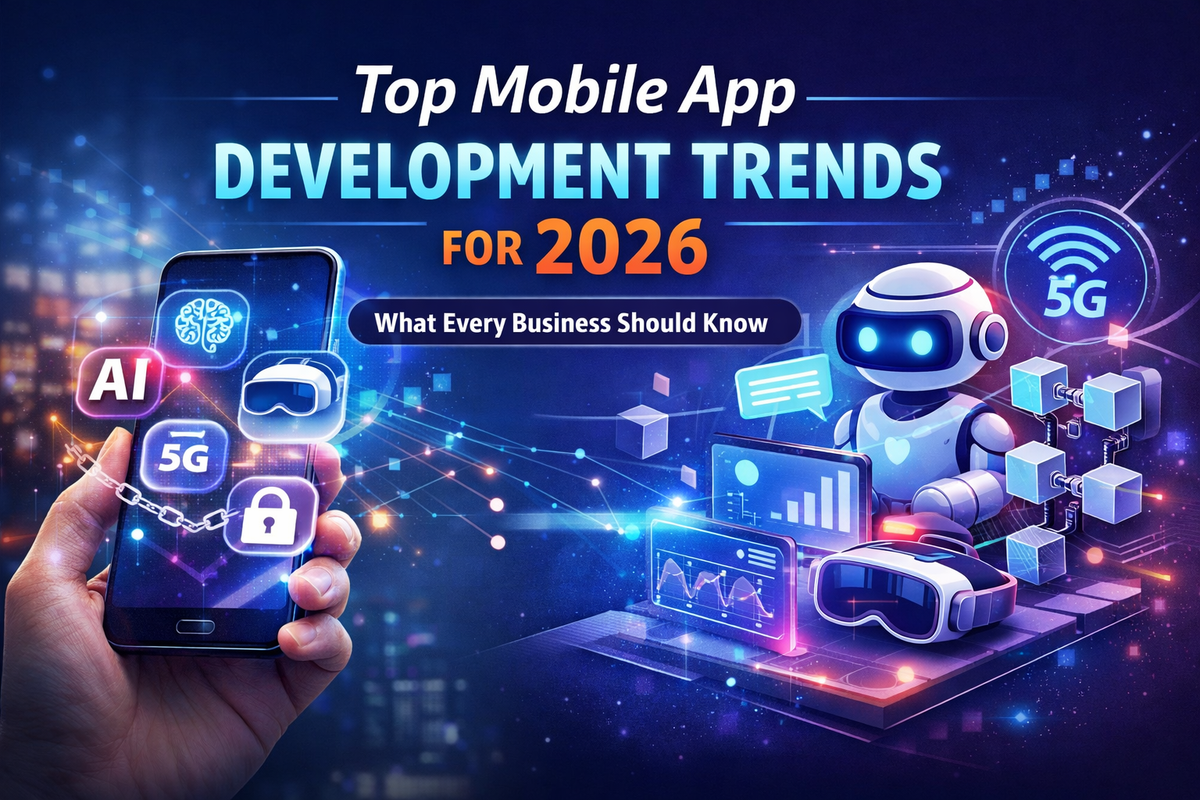
What Every Business Should Know
Mobile apps are now a core part of every business. From startups to global brands, companies depend on mobile apps to reach customers, improve operations, and increase revenue. But the app industry changes fast. New technologies, user expectations, and market demands shape how apps are built.
As we enter 2026, businesses must stay ahead of mobile app development trends to remain competitive. If you are planning to build a mobile app or upgrade your existing one, this guide will help you understand the most important trends for 2026.
At Webel.io, we develop mobile apps that match modern technology and business needs. In this blog, we share the top mobile app development trends shaping 2026 and explain how they can impact your business.
Why Mobile App Trends Matter in 2026
Mobile apps are no longer optional. They make it easier for customers to connect with businesses. People want fast, simple, and mobile-first experiences.
Here are three reasons why app trends matter today:
1. Customer expectations are rising
Users want apps that are fast, secure, and personal. Outdated apps lose customers.
2. Technology is advancing fast
New tools like AI, AR, and blockchain are changing how apps work.
3. Competition is increasing
Millions of apps are available. Trends help you stay ahead.
Understanding the latest tech solutions lets you build better products, save cost, and grow faster.
Top Mobile App Development Trends for 2026
Below are the most powerful trends shaping the app world in 2026.
1️⃣ AI-Powered Mobile Apps
Artificial Intelligence (AI) is one of the biggest drivers of mobile innovation in 2026. Businesses are using AI to automate tasks, improve user experience, and make smart decisions.
Examples of AI in apps:
- Chatbots for customer service
- Predictive search and suggestions
- Voice assistants
- Smart content delivery
- Image and speech recognition
AI improves app speed and accuracy while reducing manual work.
Why this trend matters:
AI apps reduce cost, increase engagement, and offer real-time personalization. Customers get what they need faster, which improves satisfaction.
2️⃣ AR and VR Mobile Experiences
Augmented Reality (AR) and Virtual Reality (VR) are no longer just gaming technologies. In 2026, many industries are using AR and VR apps to boost customer experience.
Where AR/VR apps are used:
- Real estate virtual tours
- Retail product previews
- Education and training simulations
- Medical visualization
- Travel and tourism guides
These apps help users interact with digital content in real-world environments.
Business benefit:
AR/VR apps increase trust, reduce errors, and improve product experience.
3️⃣ Cross-Platform App Development
Cross-platform technologies like Flutter and React Native continue to lead the industry. Businesses now prefer one codebase for both Android and iOS to save time and money.
Why cross-platform is popular:
- Lower development cost
- Faster launch
- Easier updates
- Similar performance to native apps
Below is a comparison between Flutter and React Native:
Table: Flutter vs React Native – 2026 Overview
| Feature | Flutter | React Native |
|---|---|---|
| Speed | Very fast | Fast |
| Codebase | Single | Single |
| UI Quality | Very high | High |
| Performance | Near native | Near native |
| Best Use Case | Complex UI apps | Large-scale apps |
Cross-platform apps will keep gaining space in 2026 because businesses want efficiency and speed without losing quality.

4️⃣ 5G-Enabled Mobile Apps
5G is expanding across the world. Faster internet speeds create new app possibilities.
Benefits of 5G for mobile apps:
- Faster download and upload
- Better video quality
- Improved AR/VR performance
- Lower latency
- Real-time IoT processing
Apps will run smoother and load faster.
Example use cases:
- Streaming apps
- Live gaming
- Smart homes
- Autonomous vehicles
- Remote surgeries (future potential)
5G will make digital apps more dependable and future-ready.
5️⃣ Progressive Web Apps (PWAs)
Progressive Web Apps continue to grow in popularity. PWAs are websites that work like mobile apps. They load fast and run even without an internet connection.
Why PWAs matter:
- No app store download
- Lower cost than full apps
- Very lightweight
- Easy updates
- Works on all devices
Many companies prefer PWAs to reduce development cost and increase reach.
6️⃣ Blockchain for App Security
As cyber threats increase, app security is now a priority. Blockchain technology offers a secure and transparent data system.
How blockchain helps apps:
- Protects data
- Reduces fraud
- Removes middle layers
- Increases transparency
Blockchain apps are useful for industries like finance, healthcare, real estate, and legal.

7️⃣ IoT-Based Mobile Apps
Internet of Things (IoT) technology connects devices to apps. In 2026, IoT-driven apps are growing in smart homes, factories, hospitals, and vehicles.
Examples of IoT apps:
- Smart thermostats
- Smartwatches
- Wearable health trackers
- Connected vehicles
- Food and agriculture sensors
IoT apps help businesses collect data, automate tasks, and control devices easily.
8️⃣ App Personalization With Big Data
Users want personal experiences. Big data analytics studies user behavior and helps apps deliver relevant content.
Examples:
- Personalized product recommendations
- Custom notification settings
- Dynamic pricing
- Targeted offers
Apps that understand user behavior create stronger engagement and customer loyalty.
9️⃣ Voice-Enabled Apps and Voice Search
Voice interaction is growing. People like using voice to search, shop, and communicate. Apps are now integrating voice assistants to improve accessibility.
Reasons voice apps are rising:
- Hands-free comfort
- Instant communication
- Better accessibility
- Faster search results
Voice-enabled technology will continue to expand across industries in 2026.
🔟 On-Demand Mobile Apps
On-demand apps like Uber, Zomato, and grocery delivery platforms are popular because they solve daily problems. In 2026, more industries will adopt on-demand models.
Examples:
- Home services
- Healthcare consultation
- Beauty and grooming
- Rental services
- Fitness and personal training
Businesses prefer on-demand apps because they bring steady income and attract new customers.
How These Trends Will Change Businesses in 2026
Mobile apps are opening new opportunities for companies. Here is how:
1. Higher customer engagement
Modern features keep users active for longer.
2. Better decision-making
AI and data analytics guide business strategies.
3. Lower development cost
Cross-platform apps and PWAs reduce expenses.
4. Increased security
Blockchain lowers data risk.
5. Faster speed and performance
5G and strong backend systems boost satisfaction.
Businesses that adopt new app trends early will enjoy faster growth and stronger customer trust.
When Should You Upgrade Your Mobile App?
If your app has:
- slow performance
- poor UI
- low downloads
- outdated design
- low engagement
- security issues
… then 2026 is the right time to refresh your technology.
How Businesses Can Prepare for the Future of Apps
Here are four steps businesses should take:
1. Choose the right development approach
Native, cross-platform, or PWA — based on need.
2. Pick features that match user goals
Not every trend suits every business.
3. Focus on performance and security
The modern user will not wait for slow apps.
4. Partner with experts
Work with a skilled development company that understands new tech.
Why Mobile Apps Are a Strategic Business Investment
Apps bring long-term value and profit. Let’s look at the major benefits:
✔ Stronger brand identity
Apps help you stay close to your customers.
✔ Higher customer loyalty
Users return more when they love your app.
✔ Direct communication
Push notifications create instant touchpoints.
✔ New revenue streams
Apps open opportunities like subscriptions, ads, and in-app purchases.
✔ Better data insights
Apps help businesses understand user behavior.
In 2026, mobile apps will not just support business — they will lead it.
Future Predictions for Mobile Apps Beyond 2026
Mobile apps will continue to change. Here is what experts expect in the coming years:
🟢 More automation
Apps will do more work for users.
🟢 Smarter security
Cyber safety will be a core priority.
🟢 Complete personalization
Apps will adapt to individual needs.
🟢 Expanded virtual experiences
AR and VR will become part of daily life.
🟢 Natural human interaction
Voice and gesture control will expand.
Final Thoughts
2026 is a big year for mobile app development. New technologies such as AI, AR, VR, 5G, blockchain, cross-platform tools, and IoT are shaping the next generation of mobile solutions. Businesses that adopt these trends early will offer better customer experiences and grow faster.
If you are thinking about building a mobile app or upgrading your current one, this is the perfect time to take action. The future of apps is powerful — and it belongs to companies that innovate.
⭐ Build Your App With Webel
At Webel, we create mobile apps that are:
- fast
- secure
- beautiful
- scalable
- future-ready
We help businesses turn ideas into successful digital products.
👉 Visit: Webel.io
👉 Get expert guidance
👉 Start your app journey today